
Transition from Conventional to Digital Fixed Prosthodontics – a Challenging Journey Full of Surprises
The transition to new workflows in fixed prosthodontics is never merely a matter of replacing one instrument or technique with another. The introduction of a digital workflow into everyday clinical practice requires a comprehensive reassessment of the entire treatment process – from the first patient consultation to the final cementation of the prosthetic restoration. A conventional impression cannot simply be replaced by an intraoral scan with the expectation that all other clinical and laboratory procedures will remain unchanged. Every innovation requires modifications to clinical protocols, changes in communication between the dental practice and the dental laboratory, and a willingness to accept that the path towards a new standard may be accompanied by mistakes, surprises and unexpected setbacks.
Based on his own clinical experience, the author presents selected clinical cases illustrating how conventional and digital workflows function in daily practice – from tooth preparation and fabrication of the provisional restoration, through communication with the dental laboratory, to the delivery of the definitive prosthetic restoration. A comparison of both approaches shows that each has its own specific indications. Digital technologies offer undeniable advantages in terms of the accuracy of digital impressions, virtual articulation, computer-aided design and milling of restorations. At the same time, however, they place higher demands on the technical equipment of both the dental practice and the laboratory, as well as on critical thinking when managing complications that did not exist in the conventional workflow. In certain clinical situations, the conventional approach still provides a level of predictability and simplicity that digital technology has not yet fully replaced.
The lecture includes comprehensive case reports of complex prosthodontic treatment – from initial diagnostics and treatment planning, through individual clinical steps, to the final outcome. The aim is to offer an open and realistic discussion of the actual transition from conventional to digital workflows, including specific challenges in cooperation with the dental laboratory as well as the real benefits that the digitalisation of fixed prosthodontics brings to modern dental practice.
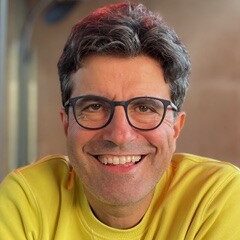
Assoc. Prof. Radek Mounajjed is a specialist in prosthodontics. He runs the private D.C.M. Clinic in Hradec Králové and is involved in teaching at the Faculty of Medicine of Palacký University in Olomouc. He has also gained professional experience abroad, including at the Mayo Clinic, and has lectured at numerous national and international professional events.
He is the author and co-author of more than 60 scientific publications and has long focused primarily on fixed prosthodontics, aesthetic dentistry, ceramic materials and the clinical application of digital technologies. He is a Fellow of the Academy of Prosthodontics, a member of the International College of Prosthodontists and the founder of the Cicero system, which connects education, clinical practice and evidence-based dentistry.